
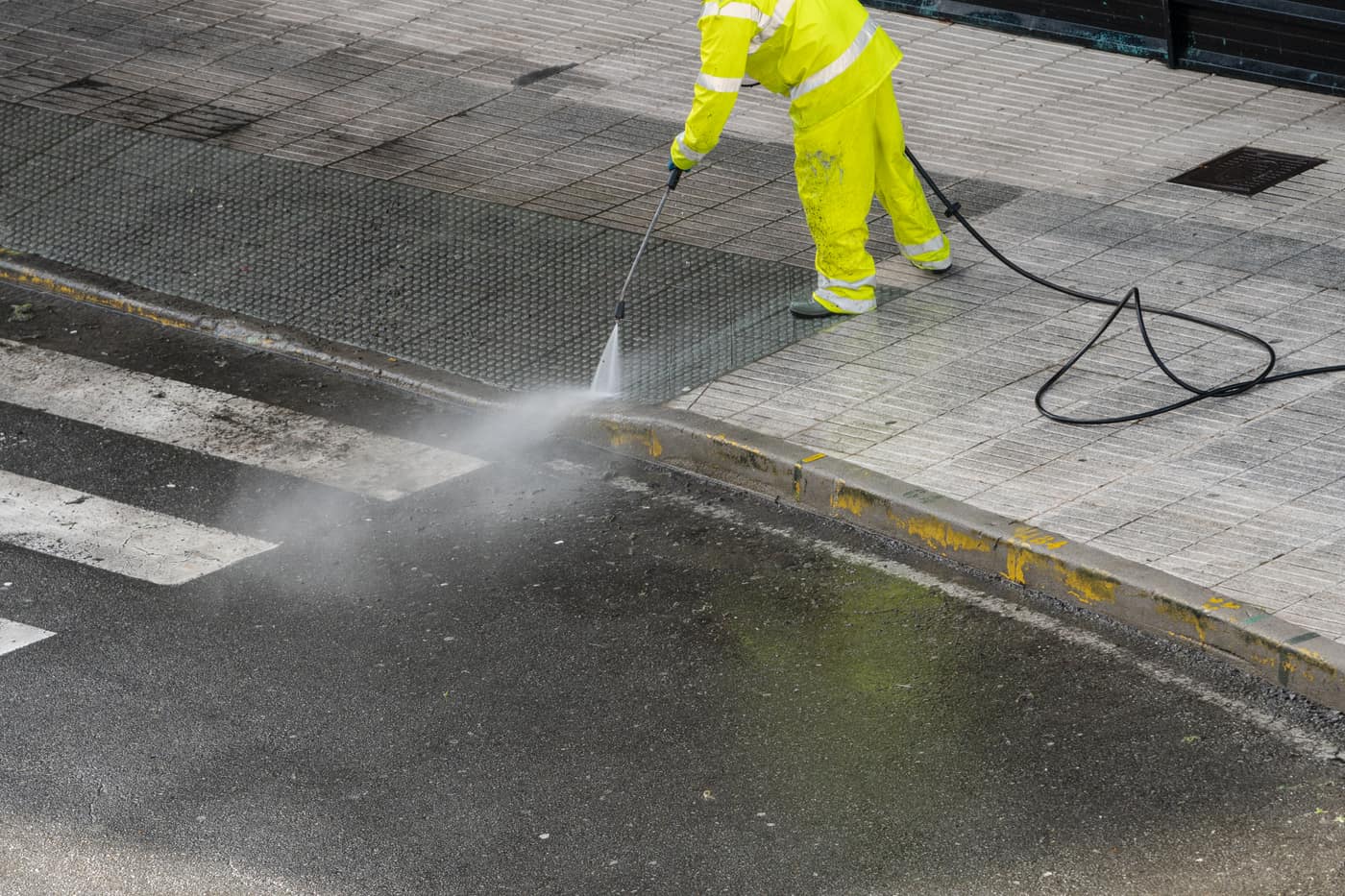
General liability insurance for a pressure washing business pays for bodily injury and property damage your work causes to other people, and for the cost of defending you when they claim it did. It is the policy behind the certificate a customer asks for, and the core liability policy of a wash business.
Every job in this trade aims water, heat and cleaning solutions at a surface that belongs to the customer, which means the property at risk includes the very surface you are standing on, in the middle of the work. A standard general liability form is written to be careful about exactly that property. Knowing where its lines fall, and which endorsements move them, is what separates a policy that answers a wash claim from one that only looks as if it would.
What the policy pays for, and what it hands to other policies
The grant is broad. A customer’s child who slips on the steps, a tenant whose car is spotted with drift, a mail carrier who falls on the wet walk, a neighbor’s hedge that browns: injury and damage to people and things outside the crew sit inside it, and the policy generally pays to defend a covered claim, even one without merit. It generally follows the business to its job sites, subject to the policy’s territory, and it also carries personal and advertising injury, which covers an allegation that your marketing used another company’s name or photographs.
It is just as clear about what it leaves alone. Your own surface cleaner, pump and trailer are not someone else’s property, so their loss belongs to equipment coverage. An injury to a person on your payroll belongs to workers’ compensation. A collision on the way to the job belongs to commercial auto. Inside the grant itself, standard wording then removes the property you are working on and the work you have done, which is where a wash business has to read closely.
A comparison in columns. Property near the work: a parked car caught in the drift, which is property damage to someone else, and a visitor who slips on a wet walkway, which is bodily injury; both sit inside the ordinary grant of general liability. The property being worked on: the driveway under the surface cleaner, where ongoing-operations wording can exclude that particular part, and a window that fogs after the job, which is read under completed operations. Not general liability at all: the surface cleaner itself, which belongs to equipment coverage, and a burn to someone on your crew, which belongs to workers’ compensation. Actual outcomes turn on the form attached to the policy. No figures are shown.
The surface under the wand
Wash damage takes a handful of recognizable forms, and each one raises a slightly different question about the policy.
Striping and etching on concrete and wood
Lap marks from a surface cleaner that paused, a fan tip held close enough to cut into the cream of a driveway, a cedar deck whose grain lifts and splinters: the damage is to the very surface under the nozzle, discovered as soon as it dries. It is the clearest case of property being worked on.
Window seals, screens and frames
Insulated glass depends on a seal at its edge. Water driven at that edge can break it, and the failure shows up as haze between the panes after the invoice is paid. Torn screens, cracked vinyl frames and lifted caulk join it. The timing matters: damage noticed after you leave is read under different wording than damage noticed while the crew is still on site.
Oxidation runs and stripped finishes
Chalky siding, faded gutters and older paint hold oxidation that comes loose unevenly. A wash can leave white runs down a gutter face or bare streaks in paint that the owner reads as a ruined finish, even when the surface was failing before you arrived. These claims turn as much on condition before the job as on the work itself, which is why photographs taken at arrival help.
Water through soffits, weep holes and vents
Water aimed upward finds soffit vents, gable vents and the weep holes at the base of brick veneer. Once it is inside the wall or the attic, the complaint becomes a stained ceiling, a soaked attic or mold, and the room that was damaged is one you never touched. That makes it damage to property beside the work rather than the surface itself, which can change how the exclusions apply.
Plant kill and chemical drift
A soft-wash mix that lands on shrubs, flower beds or a lawn can brown them within days, and drift can carry it onto a neighbor’s plantings or a parked car. The loss is plainly someone else’s property; the question it raises is about chemistry, which the section on the pollution exclusion below takes up.
How a standard form reads damage to the job
A standard commercial general liability form, as it is generally written, contains a group of property damage exclusions aimed at contractors. Each insurer files its own version, and the form attached to your policy is what governs; what follows is the usual outline.
Care, custody or control. Personal property in your care, custody or control is excluded. For a wash crew that can reach a customer’s patio furniture moved aside for the job, a grill rolled off the deck, or a vehicle you were hired to clean.
The particular part you are working on. Damage to that particular part of real property on which you are performing operations is excluded when the damage arises out of those operations. While the surface cleaner is on the driveway, the driveway is that part.
Work incorrectly performed. Damage to that particular part of any property that must be restored, repaired or replaced because your work was incorrectly performed on it is excluded, though the standard form exempts damage that falls within the products-completed operations hazard. In plain terms, the cost of redoing your own faulty work is generally not covered.
Damage to your work. Once a job is finished, damage to your own completed work arising out of it is excluded, subject to an exception for work a subcontractor performed on your behalf.
Read together, these exclusions explain why a striped driveway may be read very differently from a fogged window found a month later, or water that ruined a ceiling, though the wording on the policy decides each: the first is the particular part under the work, the others are damage that spread beyond it or surfaced after the operations ended.
A flow in order. A customer reports damage. The first question is whose property it is and when the damage happened: during the work or after it was finished. Next the standard exclusions are applied: property in your care, custody or control, that particular part being worked on, and damage to your own work. Then the endorsements on the policy are read, because a buy-back or a voluntary property damage endorsement can restore part of what the exclusions took, and an added exclusion can take more. Last comes the answer: what the policy pays, what it does not, and what the deductible is. The steps are general; a particular policy’s endorsements can reorder the answer. No figures are shown.
Endorsements that change the answer
The base form is only the starting point. The endorsements stapled to it decide how a wash claim actually lands, and they cut both ways.
Care, custody or control coverage. Some insurers will add back coverage for property in your care, custody or control, or for the particular part of property you are working on, with its own limit and deductible. For a business whose main exposure is the surface under the nozzle, this endorsement deserves the closest read on the quote.
Voluntary property damage. This endorsement pays for damage to a customer’s property during your work whether or not you were legally liable, up to a modest limit of its own. It lets you settle a broken screen or a spotted car door quickly, without arguing fault, and keeps small complaints from becoming formal claims.
Exclusions added for cleaning contractors. The other direction exists too. Some policies carry endorsements that exclude damage from pressure washing operations, from chemical application, from roof work or from work above a certain height. A policy with one of these can look complete on the declarations page and still leave your signature claim uncovered, which is why the endorsement schedule deserves a full read.
When the damage appears after the crew leaves
Some complaints come weeks after the invoice. The haze between the panes, the stain spreading on an upstairs ceiling, the paint that starts peeling after the next rain: each can surface well after the job was finished and paid for. General liability handles that through the products-completed operations hazard, which usually covers injury and damage arising from work you have finished, when the policy includes it, away from your own premises, under its own aggregate limit.
Two practical points follow. General liability is commonly written on an occurrence basis, in which case the policy in force when the damage occurred is the one that answers (confirm the trigger in your own wording), even if the customer calls after you have changed insurers. And because a late claim is a contest about what the surface looked like before you arrived, notes and dated photos from the start of each job help support your side of a completed-work claim.
Soft-wash chemistry and the pollution exclusion
General liability forms commonly carry a broad pollution exclusion, and the definition of a pollutant usually reaches irritants and chemicals. Read literally, that can sweep in the sodium hypochlorite, surfactants and degreasers a soft-wash or dumpster-pad business uses every day, which puts the plant-kill claim and the drift on a neighbor’s car in question.
Insurers handle this differently. Some write a limited exception for chemicals used in the ordinary course of your work; some exclude them outright; some offer a separate contractors pollution policy for runoff and discharge. If wastewater from your jobs can reach a storm drain, the EPA’s stormwater program describes how runoff to storm drains is regulated, and the rules that apply to you vary by place; the policy question is whether a discharge claim would be answered at all. Ask how your quote treats both drift and runoff, by name.
When a commercial client sends insurance requirements
Commercial work comes with paper. A property manager, a homeowners association or a retail landlord will ask for a certificate of insurance, and the request usually names conditions: additional insured status for the owner and the manager, coverage that is primary and noncontributory, a waiver of subrogation, and sometimes completed operations coverage for the additional insured as well as ongoing work.
Each condition is an endorsement. A blanket additional insured endorsement that applies wherever a written contract requires it saves reissuing the policy for every new client, but its wording has to match what the contract asks for, including whether it covers completed work. Send the contract language with your quote request so the agent can place a policy that answers it, instead of a certificate that only describes one.
The owner who runs the business from home
A wash business run from a driveway and a garage is still a business, and homeowners policies commonly exclude business activities. A customer hurt at a job site, or the damage your crew does on someone else’s property, is not a homeowners claim, and the liability section of a homeowners policy is unlikely to respond to it. General liability is the policy that does. The gear parked in that garage is a separate matter, covered by equipment coverage or by business property, not by general liability.
Setting the limits for a wash business
Expect several numbers on the declarations page, not one: an each-occurrence limit, a general aggregate for the policy year, its own aggregate for products and completed operations, and smaller limits for damage to rented premises and medical payments. A care, custody or control endorsement or a voluntary property damage endorsement adds its own sublimit and deductible on top.
In practice the limits are set from the outside in. Commercial contracts and property managers state the limits they require, and the highest requirement among your clients often sets the minimum. Above that, the questions are how valuable the properties you wash are, how much commercial work you take on, and whether an umbrella should sit over the policy instead of raising its limits.
Why Pressure Washing Business Insurance
Two general liability quotes for the same wash business can look alike on the declarations page and differ in the wording behind it, so we read that wording. When we quote, we ask what you wash, whether you soft wash or work on roofs, what share of your work is commercial, and which contracts set insurance terms for you. The account goes only to insurers on our panel that want wash work. We mark care, custody or control, the particular-part wording, the pollution exclusion, any added exclusions and the additional insured endorsement on the quotes we send you. The whole program, policy by policy, is laid out on the pressure washing insurance page.