
Workers’ compensation pays for the medical care and lost pay of an employee hurt while working for your wash business, and its employers liability part answers if that worker or a relative sues you over the injury. It is the policy for the person on your crew; it does nothing for the customer whose siding was damaged.
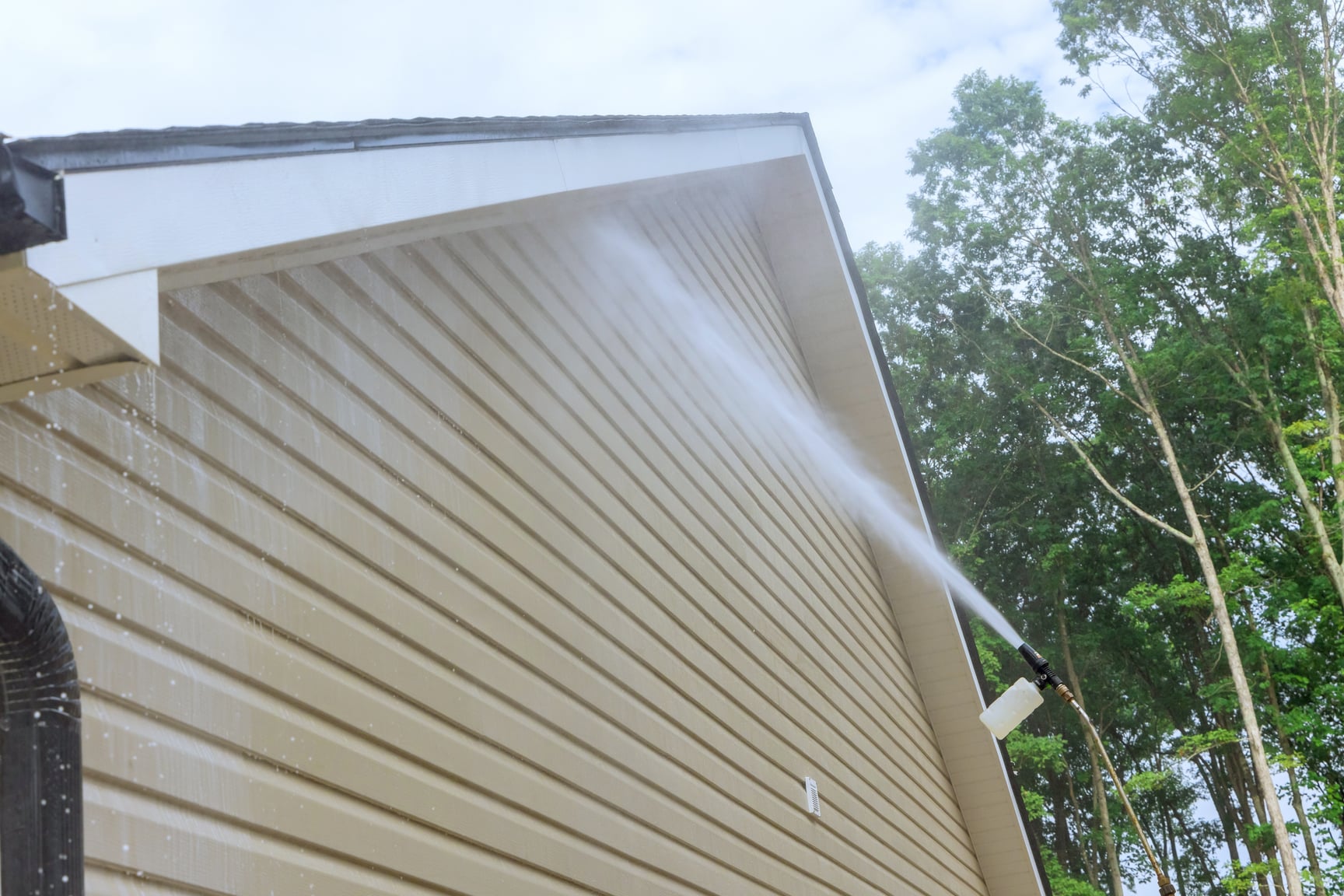
A wash crew works on wet footing, on ladders and rooflines, behind a nozzle that can cut skin, and around chemicals that burn. The helper you hire for a busy week is exposed to all of it from the first hour. When that helper is hurt, a classification question can surface when a claim is made, and it is better answered before then.
Columns showing which policy answers after an injury on a wash job. In the first group, the hurt person is on the crew: workers’ compensation benefits cover medical care and lost pay for the employee, and the employers liability part answers when the injured worker or a family member sues the business. In the second group, the hurt person is outside the crew: general liability answers for a customer, a passerby or a neighbor who is injured, and for damage to their property. No figures are shown.
Two parts of one policy, and where it hands off
The policy has two parts that work differently. The first provides workers’ compensation benefits: payment for the injured employee’s medical treatment and a portion of the pay they lose while recovering, plus other benefits the rules where you work provide. The second, employers liability, is the backstop for a lawsuit tied to a worker’s injury that the benefits do not resolve. Each part is written with its own terms.
What it does not do is as important. Injury to a customer, a neighbor or a passerby belongs to General Liability, as does damage to the surface being washed. A pump or surface cleaner stolen from the trailer belongs to Equipment Coverage. The building you own, if any, and your business personal property belong to Property. A crash on the way to the job splits between Commercial Auto Insurance for the vehicles and the people in them outside the crew, and generally this policy for an employee injured while riding in the truck. And when a claim outgrows the limits underneath, an Umbrella can sit above the liability parts.
Ask whose body was hurt. If it was someone on your crew, this is usually the policy; if it was a homeowner, a tenant or a passer-by, the claim goes to General Liability.
How a wash crew actually gets hurt
The injuries of this trade are physical, repetitive and sometimes sudden. They are described here so you can recognize them, not to put a figure on how often they occur.
Falls from ladders and roofs
Roof washing and second-story work put people on ladders, extension poles and sloped surfaces that become slick the moment the water starts. A fall can mean weeks away from work, and for a small crew that is lost production as well as a claim.
Injection injuries from high-pressure spray
A stream at working pressure can break the skin of a hand or foot with very little visible wound, driving water and whatever is in it beneath the surface. These injuries can look minor, and anyone hit by high-pressure spray should be seen by a medical professional promptly, which is part of why the medical side of the policy matters.
Chemical burns and eye injuries
Soft-wash mixes and cleaning agents splash, drift back on the wind and settle in the eyes. A mixing mistake at the tank, a hose that lets go, or a gust during roof treatment can all end at an eye wash station, or in an emergency room.
Hot water, hoses and heat
Hot-water units burn what they touch. Dragging hose reels and lifting engines strain backs and shoulders. A summer crew works long hours in direct sun, with heat illness as a risk that the newest helper is the least prepared to notice in themselves.
How the policy form generally works on these injuries
The sequence after an injury is much the same from form to form. When a worker is hurt, the business reports the injury promptly, the insurer handles the claim for medical care and wage replacement, and the business is generally not asked to argue fault in the ordinary case. How a worker’s other remedies interact with the benefits varies by state, and the agent confirms it for yours; the employers liability part exists for the lawsuits that follow an injury.
Fault is generally not the test, though rules vary by state, so a helper’s mistake with the wand is not by itself the issue. What can turn a claim into a dispute is a question about whether the person was a worker at all. That is where the paperwork comes in.
Helpers, seasonal and part-time crews
An operator may add helpers in busy seasons: a cousin for the weekend, a high school student for the fleet of driveways, a friend who knows roofs. Part-time and seasonal work can still count toward the policy; the agent confirms how your state treats it. The estimate at the start is built from the roles on the crew and what they will be paid, so the useful conversation with the agent is about who works the machines, who climbs, and who handles the chemicals, because those roles carry the injuries described above.
If your crew changes mid-season, the policy and the audit that follows need to reflect it. A helper added in June who is never mentioned does not disappear; the person shows up in payroll records, or in a claim, later.
The contractor label and who counts as a worker
An owner may pay a helper on a contractor form and consider the question closed. The form alone does not close it. The U.S. Department of Labor explains the problem of misclassifying employees as independent contractors, and the IRS publishes its own guidance on independent contractor or employee status. Both describe factors beyond the label on the paperwork, such as control over the work, who supplies the equipment and who carries the financial risk. States may apply their own tests, so confirm with the agent and your tax adviser.
For workers’ compensation, the practical consequence is that a helper you called a contractor can be treated as an employee when an injury or an audit raises the question. A person who brings their own washer, sets their own schedule, serves other customers and carries their own insurance may be treated as a contractor. A person who rides in your truck, uses your rig and follows your instructions all day may be treated as a worker; classification rules vary.
Owners, partners and officers
A separate question is whether you are on the policy yourself. Sole proprietors, partners and corporate officers may be able to include or exclude themselves, depending on the state and the way the business is organized. The choice is real in either direction: being left off the policy affects what happens if the owner is the one who falls from the ladder, and being included can affect how the premium is built. This page makes no claim about which option fits, because it turns on facts about your business and your state. The agent confirms the rules for the state where you operate before you decide.
A flow, left to right. The premium starts from a payroll estimate at binding. The season of work follows, with helpers coming and going. The auditor then reviews payroll records and contractor payments, including certificates from subcontractors. The premium is trued up, and it can move up or down. The next term starts from what the records showed. No figures are shown.
Uninsured subcontractors and the premium audit
Wash owners sometimes bring in a subcontractor for a large commercial pad or a roof. If that subcontractor has no workers’ compensation policy of their own, an insurer may treat the work as yours when it audits the account, and the premium can be charged as if those workers were on your payroll. The same gap can put a claim on your policy if the subcontractor or the subcontractor’s helper is hurt. The habit that prevents both is plain: ask for a certificate of insurance before the first job, keep it with the invoice, and note when it expires.
A premium audit compares the estimate with the records. The premium on this coverage begins as an estimate of payroll and crew roles. After the term, the insurer compares the estimate with the records: payroll, contractor payments, and the certificates from anyone you used. The premium is then adjusted, up or down. Keeping payroll and helper records during the season makes the audit easier to answer.
Limits and structure
Benefit rules are set by each state and the agent confirms yours, so that part of the policy is not something the owner chooses by amount. The employers liability part has limits that are chosen, and what drives that choice is the size of the crew, the severity of the work the crew does, and whether a contract or a customer asks for a particular level. The agent also reviews whether the limits line up with what an umbrella above the liability coverages expects to see underneath.
Structure matters as much as amount. How the crew is classified, how seasonal hires are described, and whether subcontractor certificates are on file all shape how the account looks to an underwriter, and so how the policy is priced and audited. None of those is a number on a quote; all of them are things you control.
Why Pressure Washing Business Insurance
A workers’ compensation quote from us starts with the people: who works for you now, who you hire in a busy month, who you call a subcontractor, and what each of them does on a job. We look at whether the paperwork matches the work, because the audit later will.
We then confirm the requirements for your state, show you the owner inclusion options where they exist, and make sure the policy fits with the General Liability, equipment and auto coverage that sit beside it. If you want to see how the pieces fit for a wash business as a whole, start with pressure washing insurance.