
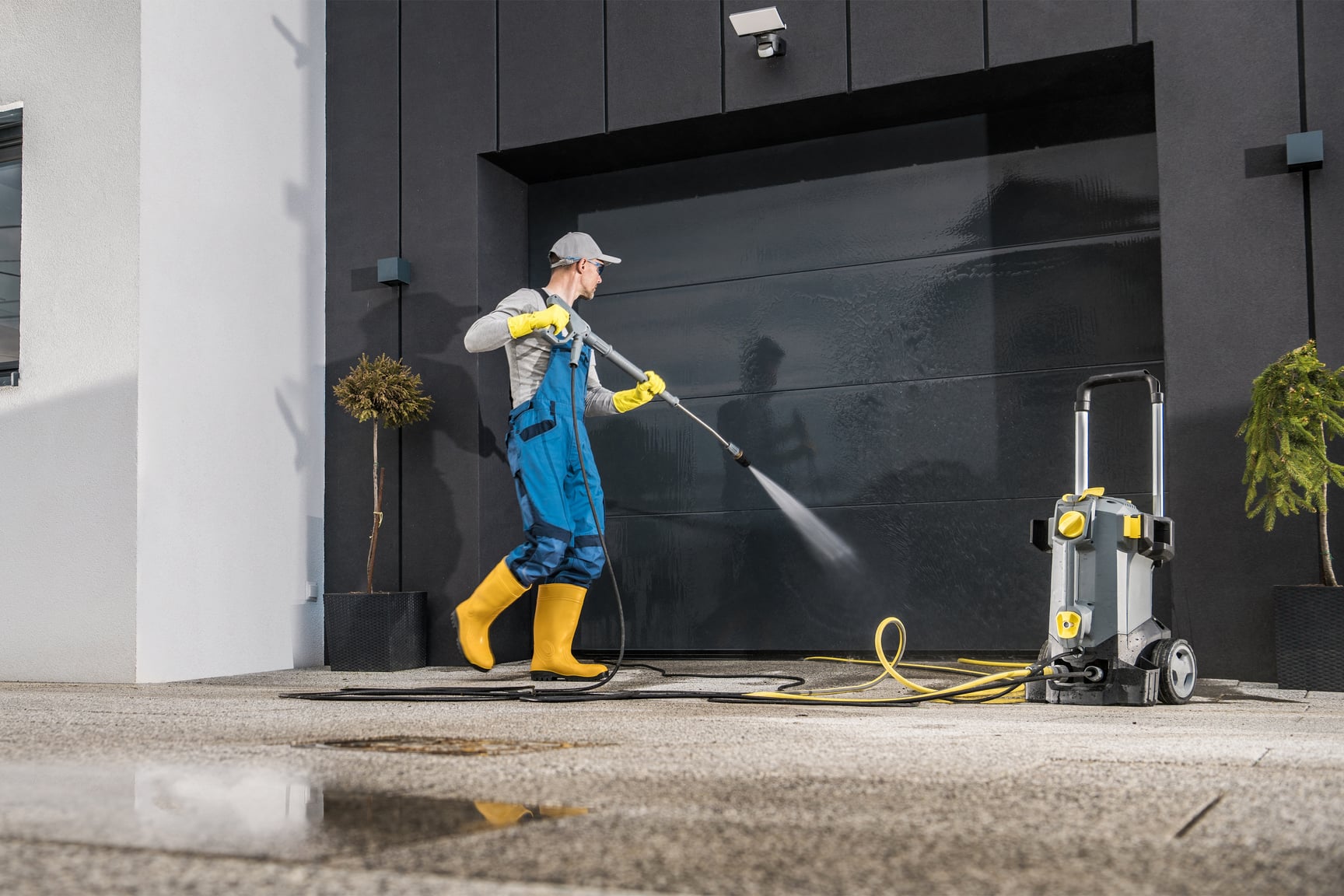
If a fire, a burst pipe or a break-in hits the place you keep the business, Property is what puts the contents back: the chemicals on the shelf, the spare parts in the bins, the tools on the bench and the computer that holds your schedule. For a pressure washing business, the base is where the trade is stocked and dispatched from, so a fire or a burst pipe there stops the work even if the trailer is untouched.
A wash operator may start from a garage or a shed, and that is where the confusion begins. The house is insured, so the garage feels insured; but the policy on the house was bought for family life, and a trade run from it sits largely outside. This page explains what Property covers, what it hands to the other policies, and how it is arranged for home-based and renting owners.
What Property pays for and where it stops
Property, written as business personal property, covers items the business owns and keeps at a described location. It is a first-party coverage: it pays you for your own loss, not a third party for theirs. That single feature separates it from the liability side of your program, and it helps to hold the three jobs apart.
Property covers what sits at the base. Equipment Coverage, an inland marine line, covers the gear that travels to jobs: the pump, engine, surface cleaner, hose reels and tank on the rig. General Liability covers the customer’s property when your work damages it. A stained deck, a cracked window or a gouged siding panel never belongs to Property, however close to home the job was.
Where an item could fit two lines, the schedule and the described location settle it, so your agent should name where each valuable piece is expected to live and write it there on purpose.
Columns for the places a loss can happen. At the base: chemicals, spare parts, office equipment and stock sit under Property. On the road to a job: the pump, engine, surface cleaner, reels and tank sit under Equipment Coverage. At the customer’s site: the surface or structure being washed sits under General Liability. No figures are shown.
The supplies, parts and paperwork that live at your base
Walking the garage with an agent, shelf by shelf, can turn up items worth listing.
Chemicals and consumables
Detergents, surfactants, degreasers, sodium hypochlorite and the other mixes used for soft washing and roof washing are stock, and a stocked shelf is a real asset. Insurers ask how chemicals were stored, so how they are kept matters after a loss. Nozzles, tips, fittings, hose lengths and gaskets belong here too.
Spare parts and tools
Spare unloader valves, seal kits, belts, pump rebuild parts and hand tools add up over a season. They are what keeps a crew working when a machine fails on a Tuesday, and replacing them at once after a theft or a fire is part of getting back to work.
Office equipment and records
A laptop, a printer, a phone, a filing cabinet, uniforms, marketing materials and signed customer paperwork all sit in the garage office or the spare bedroom. Property can respond to the equipment itself, and a business policy can add coverage for the cost of recreating records, which matters when your customer list lived on one laptop.
How the policy form treats a base like yours
Forms vary from insurer to insurer, yet nearly all of them are built from the same parts. A property form names the described premises, lists the kinds of property covered and states which causes of loss it responds to. The broader forms cover the listed causes unless excluded; narrower forms cover only the causes they name. Ask which one you are being offered.
The form also says where property must be located to qualify. Items at the described premises are covered; items away from it are often covered only in a limited way or not at all, which is one reason the road-going gear is handled by a different coverage. A form commonly expects you to protect the property from further damage after a loss.
Valuation changes the outcome too. Some forms pay replacement cost, others pay actual cash value after depreciation, and the choice decides whether a worn shelf of parts is replaced with new ones or paid at its depreciated value.
The choices that change the answer
Several decisions shape what Property does for a wash business, and each is easier to make before a loss.
Replacement cost versus actual cash value is the first. The second is whether the limit is stated for the whole location or schedules specific items. The third is the cause-of-loss form, broad or narrow. The fourth is whether to add business income and extra expense, a concept that covers lost earnings and the added cost of working from a temporary place while a covered loss is repaired. It matters to a home-based operator because a damaged garage can halt dispatch entirely.
Then there is the building. If the business owns a shop, the structure is insured under a building form, which is written differently from a contents form and is tied to the cost of rebuilding. If the business rents, the landlord often insures the structure and the tenant the contents, as the lease provides, and any improvements you pay to install should be addressed in the lease and with your agent so that nobody assumes the other party covered them.
The home-based owner and the homeowners policy
A wash business that begins in a garage can take false comfort from the homeowners policy that covers the house. A homeowners form is built around living at the address, and it commonly limits coverage for business property to a modest sub-limit while excluding some or all of the activity that makes it business use. Chemical stock, tools and a trailer often fall outside what it was designed to protect.
Home-business endorsements exist to close part of that gap. They tend to suit a quiet, low-inventory business with an office desk and a small amount of stock. A wash operator with a loaded garage, a shed of chemicals and a spare-parts shelf may have more at the base than such an endorsement is designed to carry, and the endorsement does not replace a business policy for liability.
The honest comparison is simple. An endorsement is typically narrower in what it covers and tied to the homeowners policy. A business Property coverage is built around the trade, is issued in the business’s name and can include business income. For a base that holds real stock, the business form is worth comparing. The Triple-I’s guidance on insuring a home business flags this gap for home-based owners, and your agent will check how your own homeowners policy words it.
A stack of layers around a home base, from the structure outward. The house and its ordinary contents sit with the homeowners policy. The business stock, tools and office gear sit with Property. The income that stops when the base cannot be used sits with business income and extra expense. The gear that travels sits with Equipment Coverage. No figures are shown.
Renting a shop, a bay or a storage unit
A growing wash business often outgrows the garage by renting space: a small shop, a bay at a shared building or a storage unit for chemicals. The move changes the insurance picture.
Often the landlord insures the structure, and the lease decides the rest; your stock is your own to insure. Your contents policy must name the new location, because property is covered at described places, and a unit you forgot to add may carry less coverage than the home you left. If the lease makes you responsible for damage to the space itself, that responsibility may involve your General Liability, and your agent should read the lease clause with you.
Storage units deserve particular care. A policy may limit coverage for property stored away from the main location, and some facilities restrict what chemicals they will accept at all. Telling your agent about the unit before you fill it is better than finding the limit after a loss.
Chemical storage and the causes of loss that hit a base
The causes of loss to plan for at a wash business base are ordinary ones. Fire is a concern where charging equipment, engine fuel and stacked chemical containers share a room. Theft is another, particularly where a garage or shed stands open during the day.
Water arrives in several forms. A burst supply line or a failed water heater is generally a different cause from rising surface water, and standard property forms commonly treat flood as its own matter requiring separate coverage. Freezing is a regional issue worth discussing: a shed with concentrated mixes and a water tank can fail overnight in a cold snap if the heat is off.
Underwriters ask about chemical storage. Containers kept closed, labeled and off the floor, incompatible products kept apart and the room kept ventilated and away from ignition sources all reduce the chance of a loss and the questions asked about it. The Small Business Administration’s overview of business insurance frames property coverage as one piece of a wider program.
Limits and structure
The limit for Property is meant to match the cost of putting the base back together, not the book value of what you remember buying. An owner can reach it by walking the garage and listing what would have to be replaced to dispatch a crew the following week: chemicals, parts, tools, office equipment and anything stored for the busy season.
Several questions drive the structure. How much stock is at the base at its fullest, in the weeks before the heaviest season? Is the valuation replacement cost? And does a deductible fit what the business can absorb without waiting on a claim? A blanket limit suits a changing inventory; a schedule suits a few high-value items. Business income and extra expense can be added if a stoppage would hurt more than the contents loss itself.
Property sits alongside Workers’ Compensation for helpers, Commercial Auto Insurance for the truck and Umbrella for liability limits above the primary policies; none of them replaces another.
Why Pressure Washing Business Insurance
Our quotes for Property start at the base itself: what is stored there, how, and who owns the walls around it. The process starts with the places where your business stores things: the garage, the shed, the rented bay, the storage unit. We ask what is kept there at its fullest, how chemicals are stored and whether anyone lives above or beside the stock.
Then we read your homeowners policy next to the business form so any gap is on paper before a loss. We set Property beside Equipment Coverage and General Liability so each valuable item lands on exactly one policy, and we confirm the details that vary by state for your own state. When you are ready, the pressure washing insurance overview shows how the whole program fits together.